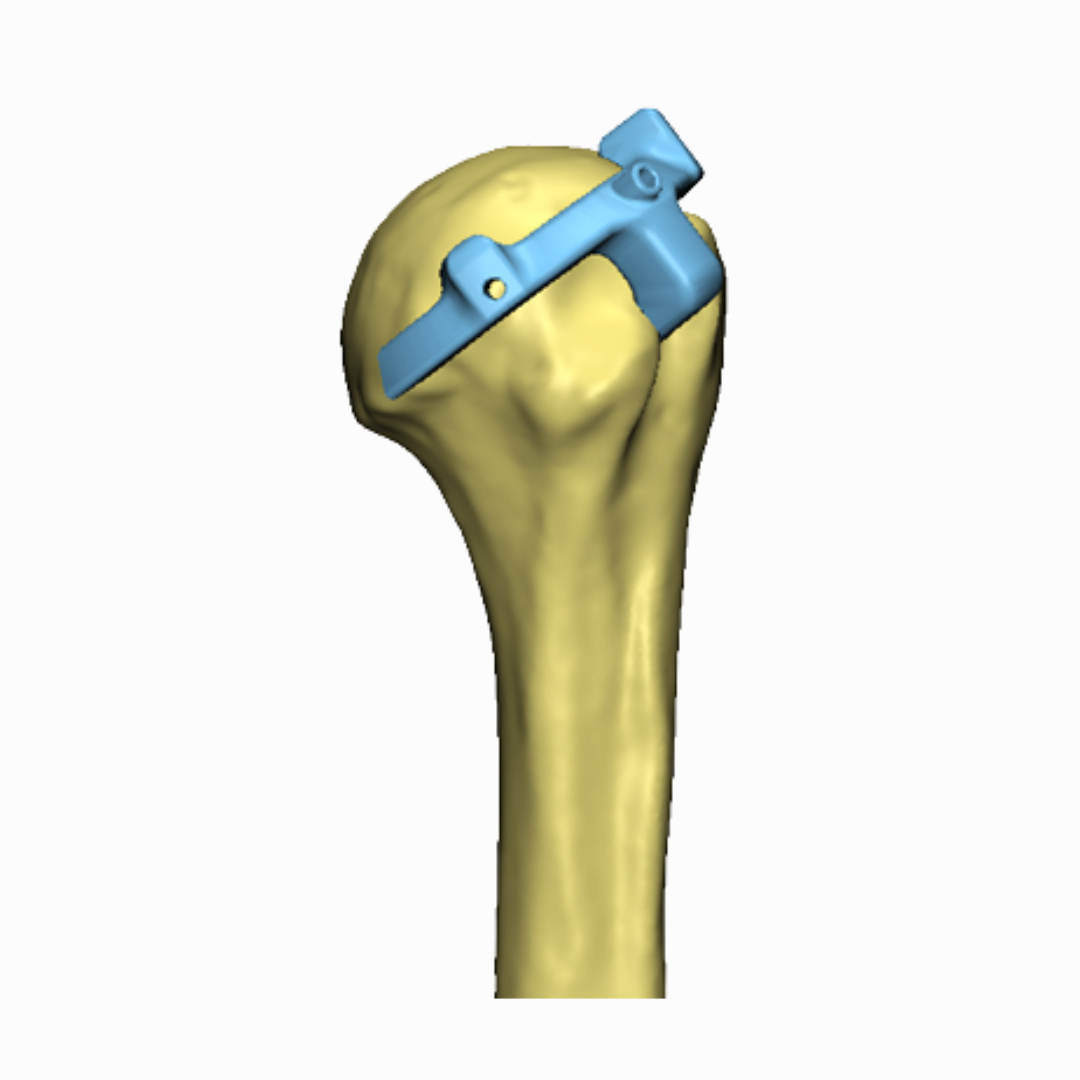
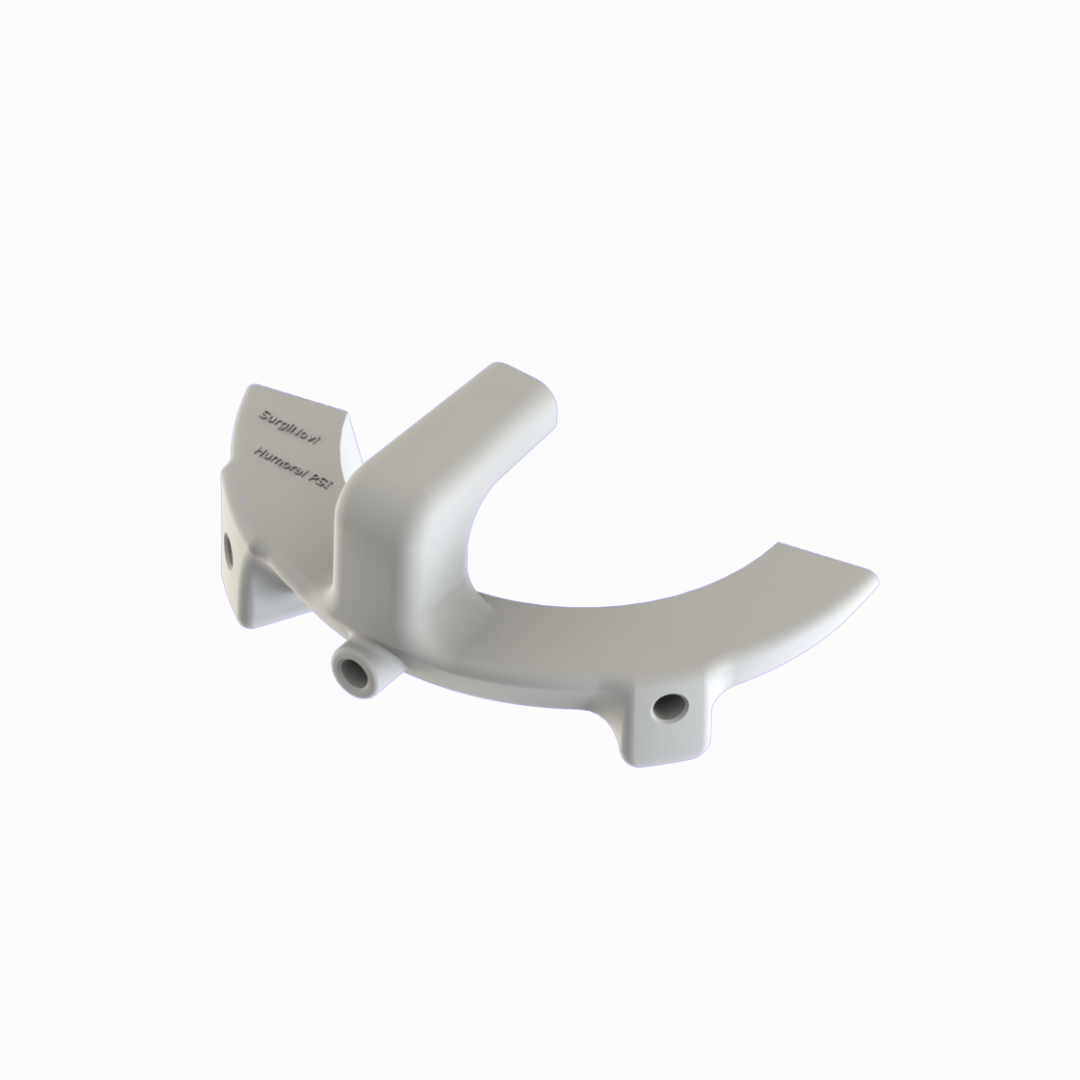
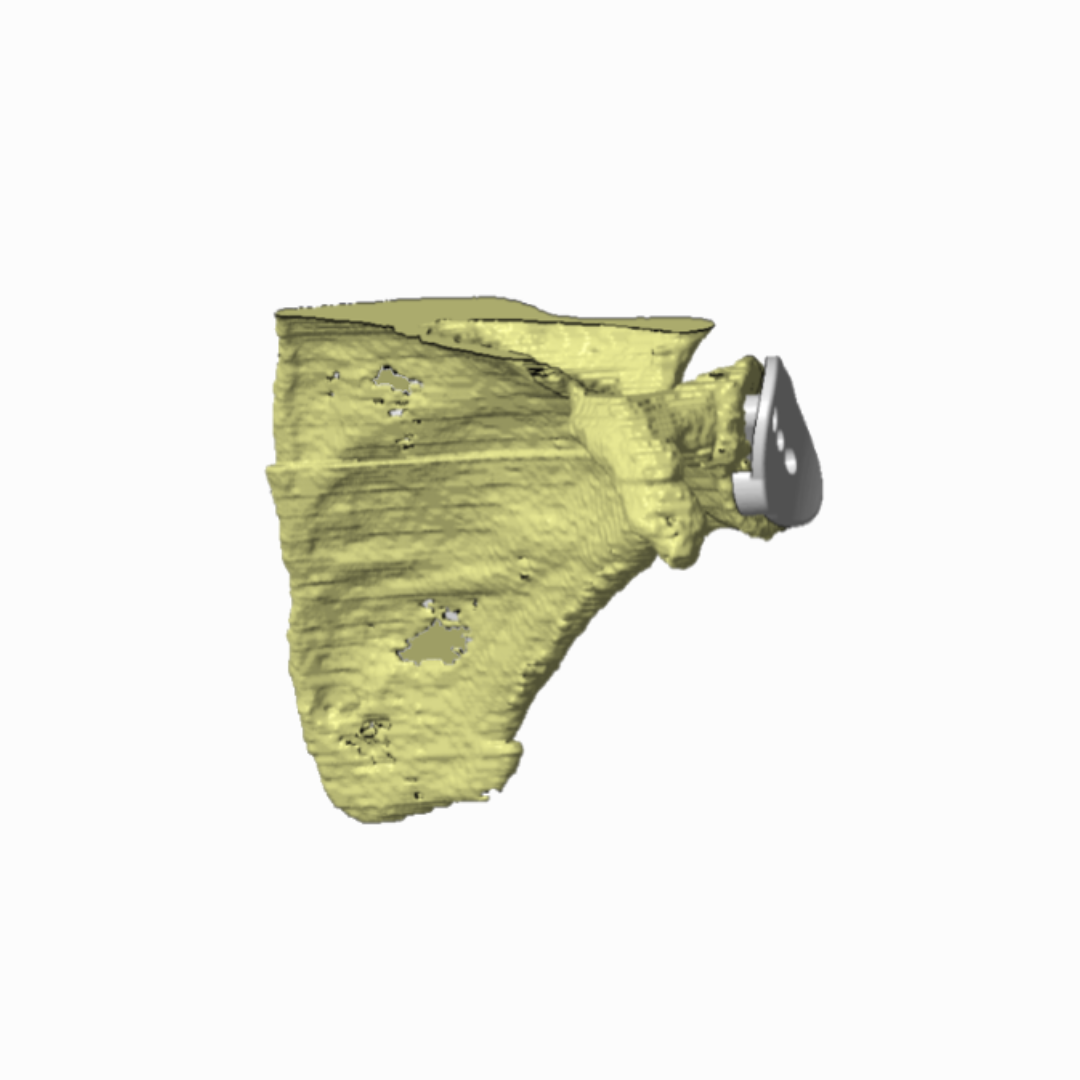
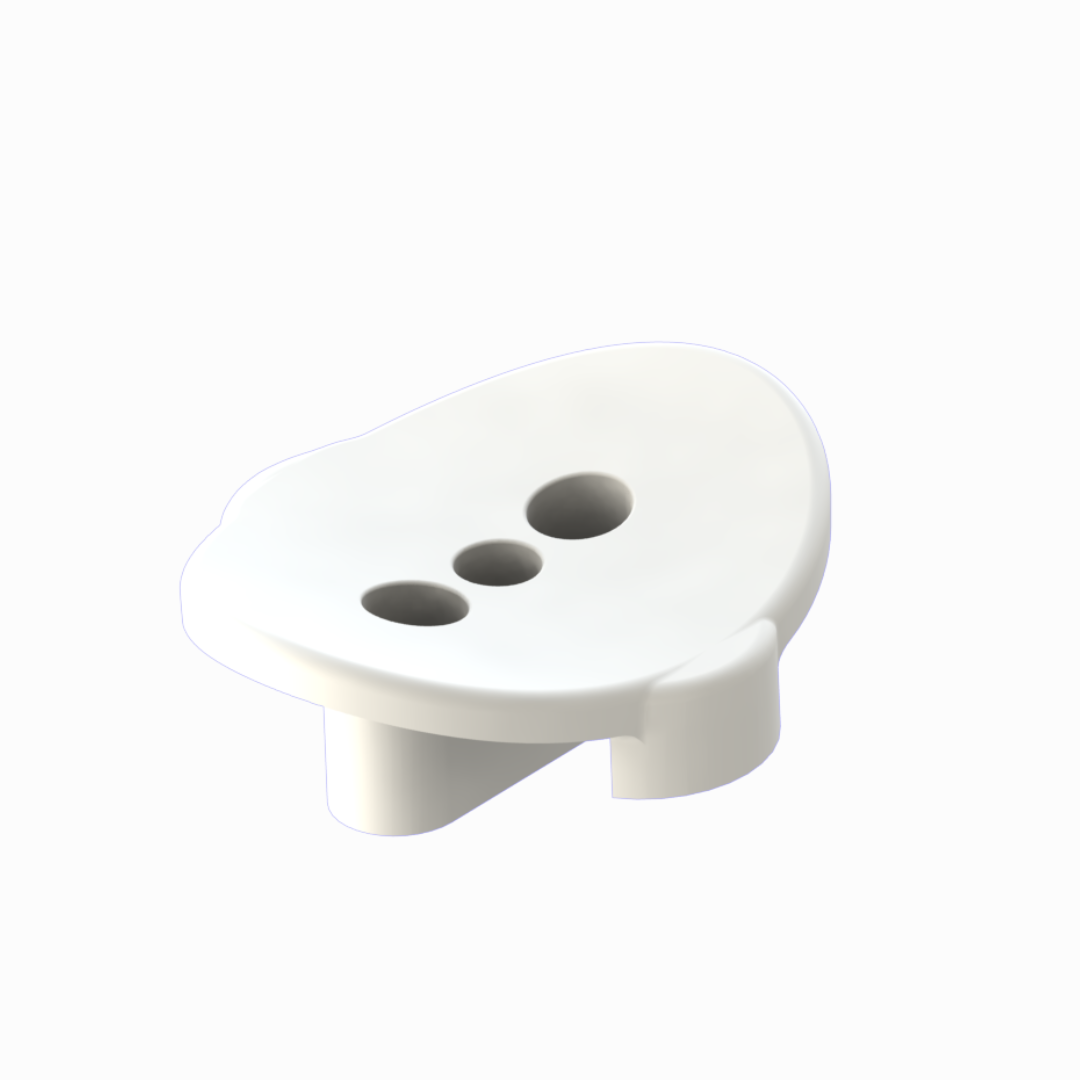
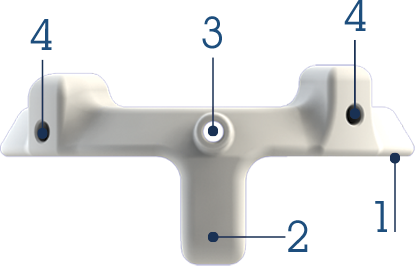
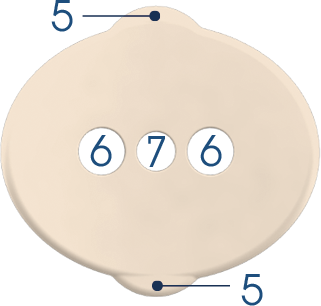
SurgiNovi’s shoulder replacement templates are designed from CT imaging to support planned preparation of the humerus and glenoid. The humeral template guides the planned humeral head cut. The glenoid template incorporates features associated with the preparation of peg or keel positions for the selected component.
These are different anatomical tasks. The humeral and glenoid elements need to be considered against the intended reconstruction, rather than described as a single guide that performs every part of shoulder replacement.
Humeral and glenoid guide features
The humeral design includes a cutting reference, surface-matching features and fixation holes.
The glenoid design includes surface-matching features and holes associated with component preparation. Their positions serve the agreed plan.
A case-specific decision
Shoulder replacement encompasses different clinical situations and implant choices.
A guide description cannot establish that one configuration is suitable for all cases of shoulder arthritis. The surgeon determines the appropriate approach after assessing the patient.
Where the anatomy is complex, the value of the planning conversation lies in making the intended preparation explicit. Questions about implant choice, guide contact or the represented anatomy should be addressed before the design is relied upon.
1. Humeral cut surface
2. Humeral head surface matching arm
3. Fixation hole in parallel direction
4. Fixation holes with oblique directions
SurgiNovi Custom-Made Patient-Specific Cutting Guide For Shoulder Replacement
Read the patient-specific templates overview for the wider product range. The anatomical models page explains how a physical model is prepared from imaging, and the 3D planning software page introduces our digital tools. These pages provide context for a shoulder guide discussion without substituting for product-specific technical documentation.